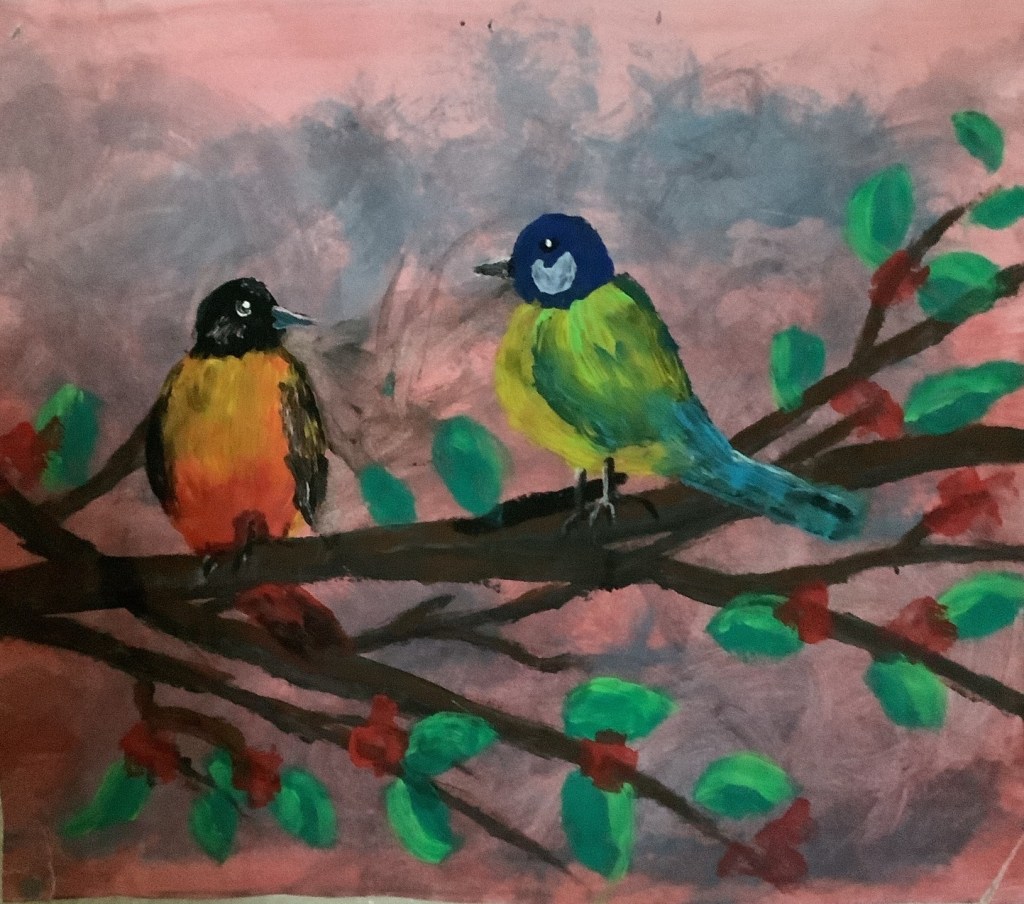
Life is filled with ups and downs that are sometimes overwhelming. Focusing my energy on things that I have some control over keeps me sane and brings me mental clarity.
Creative Emphasis Art by Linda Dawkins
When I seek opportunities that end up eluding me, I avoid feeling disappointed. I remind myself that doing my best is good enough. I choose to focus on the positive experiences I gain along the way.
I am able to control my reaction to difficult experiences. When I respond in a positive fashion, I usually get the best results, regardless of the situation.
Creative Emphasis Art by Linda Dawkins
I have control over my own actions, so I spend energy on being the best I can be. I have a lot of confidence in myself. I am proud to show my strengths to others despite how they feel about me.
Another person’s impression of me is their concern and has little impact on my impression of myself.
I am guided by principles that enrich my life and take pride in the person I am today. It feels good to like myself through and through.
Practicing “Once Upon A Lowly Stable” Children’s Songbook Hymn, (it’s the only song I’ve learned to play to the end on a guitar, while waiting for paint to dry.
Everyday, I avoid putting a burden upon my heart with things outside of my control. I choose to live a life free of anxiety and worry. Life is positive and rich when I channel my attention to the things that I can make an impact on.
The final result in this project is that when it comes to a discrepancy in which water is the foe, apparently the water wins. Creative Emphasis Art by Linda Dawkins
Self-Reflection Questions:
How would your life change if you focused on those things you have some control over?
How do you respond when you are bombarded with challenges?
What are some techniques you use to maintain a calm spirit?
“Unfinished”… Creative Emphasis Art by Lind Dawkins
Which Task First? A Practical Process to Get More Done
This is one of the biggest questions facing anyone that is facing a long to-do list: which task should you complete first?
For most of us, a typical working day – or even a typical weekend of chores – is going to involve a number of different tasks, each of which will challenge us in unique ways.
We might have a few big jobs to complete which may include things like filling out spreadsheets, clearing an inbox, tidying a room, or reading a book.
On top of this, we might also have a bunch of smaller tasks, which can include such things as:
Answering emails
Making calls
Fixing errors from yesterday
Taking out the trash
As well as varying in size though, these tasks will likely also vary in terms of importance and urgency.
Faced with such a huge list of tasks, it can sometimes be hard to know where to begin. And this indecision can lead to options paralysis – basically preventing us from doing anything even moderately useful.
So, how do you prioritize and approach such a list?
Urgent versus Important
One thing to consider, and this is an idea that is popularized by Tim Ferriss, is which of your tasks are important versus which are urgent.
Important tasks need to get done, yes. But urgent tasks need to be done sooner.
So, an urgent task in this case might mean responding to an email regarding a decision that needs to be made in the next hour. An important task might be reaching out to a potentially lucrative new client.
Tasks that are urgent and important are the ones that should be completed first.
But after that, you should give priority to your urgent tasks.
And of course, once you’ve completed the important tasks next, you can then go on to look at your frivolous tasks.
Close Open Loops
Another tip that Tim Ferriss advocates is to “close open loops.”
What does this mean?
Essentially, it means ticking off those small unnecessary tasks at the start of the day that are going to nag at you.
Some jobs are quick and easy to complete, like responding to emails. However, they can nevertheless cause us anxiety and make us stressed. This, then, actually ends up stealing our attention away from the more important tasks that require more attention and focus.
Closing open loops helps you to stay fixated on the most important tasks – and that is crucial.
Zombie Mode
Finally, consider that at two points during the day, you are likely to be in what is referred to as “zombie mode.” Zombie mode occurs first thing in the morning (before that coffee kicks in) and at the end of the day.
With lowered mental faculties at this point, it becomes more appropriate for you to complete tasks that require less focus. Zombie mode tasks include things like responding to simple emails, entering non-critical data, and stuffing envelopes.
A zombie-mode task is anything that you could complete while holding a conversation.
Schedule these for the times when you aren’t firing on all cylinders.
Leaving Things Unfinished
Finally, once you get to the end of the day, start tomorrow’s most urgent task but don’t finish it.
Why? Because it creates a new open loop. But this time the open loop is a positive thing. That’s because we have a natural inclination and urge to want to finish tasks that we’ve already started. So, if you begin the next project, it will be that much easier to pick it up again tomorrow. In fact, it will be hard not to!
Use this process each day at work and each time you have a long to-do list. You’ll enjoy less
As a kid, Oscar the owl spent much of his time hanging out with older owls observing how they did things. He gained a lot of wisdom that way. One day, his vigilance came in handy when he needed to take quick action to save his family…
“You’re so boring, Oscar!” his best friend Lester commented one day. “Why don’t you come and fly around with us?”
But Oscar never took his friends’ criticisms to heart. He knew that pretty soon, he’d be old enough to have to rely on the wisdom he’d been gaining from the old folks.
His favorite lesson was how to keep watch at night for predators.
While everyone was relaxing at home one night, he went to meet the senior owls who were on nightwatch. “I want to learn as much from you guys as I can,” said Oscar. “Pretty soon, I’ll be the one in charge of protecting my family.”
He had a good night of observation training with the senior owls and was on his way home when he noticed that something wasn’t right.
He put his lessons in vigilance to use and identified a cat lurking in the shadows of his family’s home.
Without a second thought, Oscar released a loud alarm call that got the attention of the senior owls on duty. “Sounds like the alarm is coming from near Oscar’s home,” announced one of the owls. And with that, they rushed to the location and scared the cat away.
“That was quick thinking, Oscar,” remarked one of the senior owls. “You bravely put your training to good use and protected your family from danger.”
Oscar felt proud that his lessons in vigilance paid off.
Moral of the story: When wisdom guides your actions, it is easy to sense when danger is near.
The Wise Young Owl Self-Reflection
There was a lot that Oscar liked about being a kid. But something told him that there was value in gaining wisdom from senior owls in the community. He believed that sooner or later, he would have to call on the lessons learned.
As he sensed, a potentially dangerous situation arose involving his family, and he used what he learned to keep them out of harm’s way.
Like Oscar, it isn’t always easy to tell when quick thinking is required. Sure it’s nice to have carefree days, but preparation for the unexpected is also important.
Wisdom comes from various sources that you encounter each day. From parents’ advice to experiences you have on the train, there are always lessons from which to develop your own wisdom.
One wise piece of advice is to remain vigilant at all times, even when you feel comfortable in your environment.
When things are going smoothly, it’s easy to let down your guard and openly trust what’s around you. But sometimes danger lurks where you least expect it. Keeping in touch with your instincts is the way to identify when something isn’t right.
Just like in the fable, the lessons you learn come in handy when you need them!
Just as you dedicate some of your time to enjoying your life, reserve some time for lessons in wisdom also. They’re there to guide you through those times when your instinct is needed to overcome a worrying challenge.
“The Young Wise Owl” Creative Emphasis Art by Linda Dawkins
Self-Reflection Questions:
What are my primary sources of wisdom?
What are some of the lessons I learn from spending time with older people?
No matter how confident we may feel, there are moments when we start to doubt our abilities. They can be fleeting moments, but they happen all the same, and they can both damage our mental health and our self-esteem.
Sometimes, we just need to take a moment to address these feelings of self-doubt and try to deal with them before they make us feel bad.
Let’s take a look at a few simple ways you can kick self-doubt out of your mind and get on being your usual positive and productive self!
Although I completed my first commission, I felt it necessary to have one of that particular design for myself, to hang on my wall. So I sketched another design on an 11×14 canvas. The design is similar to the king sized project that I finished earlier this week. Except that there are two adjustments I made in the design.I added two extra palm trees and tried to get a furnace in there. I was doubtful that I would be able to create it as close to the original as possible. Nevertheless, I tried.
5 Ways To Overcome Self-Doubt
Here’s where I ‘actually’ started seeing what I sketched out.
Remind yourself of your goals. Next time you feel a little bit low and lack confidence, take a look at one of your projects or a goal that you have set.
Consider the short-term impact of your goal, the mid-term impact, and then the final result.
By breaking down your goals, you can take a moment to look at what you have achieved and what you are continuing to achieve.
If you see real, tangible progress, you will be less likely to doubt yourself and more likely to push toward the next opportunity.
Make a list of your achievements. Lists are healthy because they allow our brains to organize and condense our thoughts, rather than getting muddled and spiraling around in our heads.
Sit down and grab a warm beverage if you’d like. Write down everything you are proud of. Be specific, or be generic, it’s entirely up to you.
Your achievements can be significant ones or small wins that allow you to take control and smile.
Even if one of them is getting out of bed, it’s an achievement, all the same, so make sure you write it down.
This can remind you of your self-worth and just what you are capable of!
Do something you love. If you are having moments of self-doubt, take yourself shopping, or to the theater, or an art gallery, and revisit a passion of yours.
By allowing yourself to explore your interests, you can remove self-doubt. You’ll appreciate that you are knowledgeable about something.
By recognizing that you have interests, you’ll generate some enthusiasm, revitalize some passion, and realize that you are an interesting and valuable person to be around.
Ask yourself why you are feeling self-doubt. Give yourself a good talking to. Sit down and consider what it is that you’re feeling doubt about.
Which part of your personality or which part of your life is causing you to feel this self-doubt?
By writing it down, you can then offer yourself solutions. Suddenly, problems can become fixable goals to work toward.
Surround yourself with supportive people. If you’re feeling a lot of self-doubt, surround yourself with friends and family to remind you how much you are loved, and how people value you.
Remember, your friends and family take time out of their schedule when they visit you, so remind yourself that they must appreciate you and recognize your worth.
Just recognizing the friends and family you have will make you appreciate your support network and, hopefully, make you feel wanted.
Self-doubt is very common. But it doesn’t have to overcome you. All you have to do is remind yourself that you deserve happiness, success, and inner peace!
“If you don’t at first succeed, try, try again… because the third time really is the charm,”
I didn’t know whether or not to add color to the bottom… This is where I quit… If I find that it needs any adjustments, I’ll make them. But for now, this is going on my wall.
If you enjoyed this read and have any suggestions or requests, please feel free to leave a comment below, I’ll do my best to respond to your messages and give you recognition for your suggestions!
Linda Dawkins Artist, Author
Thank you very much!
Creative Emphasis Art, which is based in Las Vegas, Nevada.
How resilient are you? When trouble comes your way, are you relatively good at bouncing back and finding your feet quickly? Or are you the kind of person who spends days, or even weeks trying to recover from the challenges that come your way?
Your resilience is a measurement of how well you can deal with difficulties in your life. While all of us struggle with upsetting events, like a death in the family or the loss of a job, resilience is what keeps us moving forward in the face of significant challenges.
Resilient people still get sad and stressed, but they’re more able to maintain a positive outlook and cope with issues when they happen. Unfortunately, while some people seem to develop resilience naturally, others struggle with achieving the same levels of grit.
The good news is there are ways you can build your resilience to ensure you’re ready for anything.
Building resilience in today’s society requires creative approaches that go beyond traditional methods. Here are some lesser-known ways to cultivate resilience:
BUILDING UP YOUR RESILIENCE
Embracing Imperfection: Rather than striving for perfection, embrace imperfection as a natural part of life. Accepting mistakes and setbacks with self-compassion fosters resilience by promoting flexibility and adaptability in the face of challenges.
Practicing Radical Acceptance: Cultivate resilience by practicing radical acceptance of circumstances beyond your control. Instead of resisting or dwelling on what cannot be changed, focus on adapting to the present moment and finding ways to move forward constructively.
Seeking Discomfort: Purposefully seek out discomfort by stepping outside of your comfort zone and embracing new challenges. Pushing yourself beyond perceived limits builds resilience by strengthening your ability to cope with uncertainty and adversity.
Building a Support Network: Foster resilience by cultivating a diverse support network of friends, family, mentors, and peers who can provide emotional support, guidance, and perspective during difficult times.
Embracing Failure as Feedback: View failure as an opportunity for growth and learning rather than a reflection of personal worth. Embracing failure as feedback encourages resilience by promoting a growth mindset and resilience in the face of setbacks.
Engaging in Humor and Playfulness: Incorporate humor and playfulness into your daily life as a way to cope with stress, foster creativity, and maintain a sense of perspective during challenging times. Laughter and lightheartedness can help build resilience by promoting emotional well-being and reducing the impact of stressors.
Cultivating Gratitude and Appreciation: Cultivate resilience by practicing gratitude and appreciation for the positive aspects of life, even amidst adversity. Focusing on what you are grateful for fosters resilience by promoting a sense of hope, optimism, and perspective during difficult times.
Connecting with Nature: Spend time in nature as a way to recharge, gain perspective, and build resilience. Connecting with nature promotes emotional well-being, reduces stress, and fosters resilience by providing opportunities for relaxation, reflection, and renewal.
Engaging in Mindful Movement: Practice mindful movement activities such as yoga, tai chi, or qigong as a way to build resilience by cultivating present-moment awareness, stress reduction, and emotional regulation skills.
Finding Meaning and Purpose: Cultivate resilience by finding meaning and purpose in life beyond individual goals or achievements. Engaging in activities that align with your values and contribute to the greater good fosters resilience by providing a sense of purpose, connection, and resilience in the face of adversity.
Build a Strong Network
Creative Emphasis Art Blog by Linda Dawkins
Many people assume that being resilient means being highly independent and capable of managing anything without help. However, this isn’t the case. Needing to ask for support from time to time doesn’t make you any less resilient.
It simply shows that you know when you need to turn to others for help.
Having people you can confide in and lean on makes life easier. Whether it’s your family members, friends, or a therapist you trust, you should have someone you can turn to when life gets tough.
While talking through your issues with another person might not make your troubles go away, it can help you to get some of the stress and pain off your chest.
While building a strong network is often associated with career advancement and professional opportunities, there are some unusual reasons why it’s beneficial to cultivate a robust network:
Access to Diverse Perspectives: A strong network provides access to individuals from various backgrounds, cultures, and industries, allowing for exposure to diverse perspectives and ideas that can stimulate creativity, innovation, and problem-solving in unexpected ways.
Source of Inspiration: Connecting with ambitious and driven individuals in your network can serve as a source of inspiration and motivation, encouraging you to set higher goals, pursue your passions, and strive for personal growth and development.
Opportunities for Collaboration: Building a strong network opens up opportunities for collaboration and partnership with like-minded individuals who share your interests, values, or goals. Collaborative projects can lead to mutual benefit, shared success, and the creation of something greater than what could be achieved alone.
Community Support in Times of Need: A strong network provides a sense of community and support during challenging times, such as personal crises, health issues, or unexpected setbacks. Knowing that you have a supportive network of friends, colleagues, and acquaintances to lean on can provide comfort and strength during difficult circumstances.
Access to Insider Knowledge and Resources: Cultivating relationships with individuals in your network who have insider knowledge or access to valuable resources can provide you with exclusive insights, opportunities, and information that you wouldn’t have access to otherwise.
Facilitation of Serendipitous Encounters: Building a strong network increases the likelihood of serendipitous encounters and chance connections with individuals who may have a profound impact on your life or career trajectory. These unexpected meetings can lead to new opportunities, collaborations, or friendships that enrich your life in unexpected ways.
Enhanced Social Skills and Confidence: Regularly interacting with a diverse range of individuals in your network helps improve your social skills, communication abilities, and confidence in various social settings. These skills are valuable not only for professional networking but also for personal relationships and social interactions in everyday life.
Exchange of Unconventional Ideas and Knowledge: Engaging with individuals in your network who have unique or unconventional interests, hobbies, or areas of expertise can broaden your horizons and expose you to new ideas, knowledge, and experiences that you may not encounter elsewhere.
Increased Resilience and Adaptability: Building a strong network fosters resilience and adaptability by providing you with a support system of individuals who can offer guidance, advice, and encouragement during times of change, uncertainty, or adversity.
Opportunities for Serendipitous Acts of Kindness: Cultivating meaningful relationships within your network creates opportunities for serendipitous acts of kindness, generosity, and support that can have a positive ripple effect on both your life and the lives of others.
Believe In Yourself
Creative Emphasis Art by Linda Dawkins
Many of us are far too hard on ourselves. We spend all of our time stressing over the things we can’t do and don’t dedicate enough of our attention to what we can do.
Having confidence in your abilities is a good way to develop your resilience. After all, if you lose your job but know you have what it takes to get a new one, you’re much less likely to spend nights lying awake and worrying.
When bad things happen, list the characteristics you have which will help you to deal with those problems. It can also be helpful to replace negative thoughts with more confident ones.
For instance, rather than telling yourself you’re a terrible girlfriend after a break up, remind yourself that you’re a good partner and you just need to find the right person.
Believing in ourselves is crucial for personal growth, resilience, and success. Here are some lesser-known reasons why believing in ourselves is important:
Unlocking Hidden Potential: Believing in ourselves unlocks our hidden potential and empowers us to pursue our dreams, goals, and aspirations with confidence and determination.
Resilience in the Face of Adversity: Believing in ourselves fosters resilience by instilling a sense of inner strength, perseverance, and optimism that helps us bounce back from setbacks, challenges, and failures.
Embracing Imperfection: Believing in ourselves allows us to embrace imperfection as a natural part of the human experience and see failure as an opportunity for growth, learning, and self-improvement.
Creating Positive Self-Fulfilling Prophecies: Believing in ourselves creates positive self-fulfilling prophecies by shaping our thoughts, attitudes, and behaviors in ways that align with our goals and aspirations, ultimately leading to greater success and fulfillment.
Cultivating Self-Compassion: Believing in ourselves fosters self-compassion by nurturing a kind and supportive inner dialogue that encourages us to be gentle with ourselves, celebrate our accomplishments, and forgive our mistakes.
Inspiring Others: Believing in ourselves inspires others by demonstrating the power of self-confidence, resilience, and perseverance in overcoming obstacles and achieving success. By believing in ourselves, we inspire those around us to believe in themselves as well.
Taking Ownership of Our Lives: Believing in ourselves empowers us to take ownership of our lives, choices, and actions, and to create the life we desire with intention, purpose, and authenticity.
Harnessing the Power of Visualization: Believing in ourselves allows us to harness the power of visualization to imagine our desired outcomes, visualize success, and manifest our dreams into reality through focused intention and positive energy.
Building Trust and Integrity: Believing in ourselves builds trust and integrity by aligning our thoughts, words, and actions with our inner values, principles, and convictions, leading to greater authenticity, congruence, and self-respect.
Living a Life of Purpose and Meaning: Believing in ourselves enables us to live a life of purpose and meaning by pursuing our passions, following our hearts, and making a positive impact on the world around us. When we believe in ourselves, we unlock the potential to create a life that is rich, meaningful, and fulfilling.
Embrace and Accept Change
Creative Emphasis Art by Linda Dawkins
Being resilient means being able to deal with sudden changes, no matter how worrying or complicated those changes might be. The unfortunate truth is that it’s impossible to prepare for everything that might happen.
Your entire world can change from one day to the next, so you need to be open to the fact that you don’t know what’s going to happen. Embracing uncertainty and being open to change is a good way to ensure you are as resilient as possible.
Embracing and accepting change can lead to numerous purposeful outcomes that foster personal growth, resilience, and fulfillment. Here are some reasons to embrace and accept change:
Opportunity for Growth: Change challenges us to adapt, learn, and grow beyond our comfort zones. Embracing change opens doors to new experiences, skills, and perspectives that contribute to personal and professional development.
Enhanced Resilience: Embracing change builds resilience by teaching us to navigate uncertainty, overcome obstacles, and bounce back from setbacks with grace and determination. Each experience of change strengthens our ability to cope with future challenges.
Expanded Perspectives: Change exposes us to different ways of thinking, living, and being, broadening our perspectives and fostering empathy, understanding, and tolerance for diverse viewpoints and experiences.
Embrace Innovation and Creativity: Change often catalyzes innovation and creativity by challenging the status quo and inspiring new ideas, solutions, and approaches to old problems. Embracing change encourages experimentation, risk-taking, and thinking outside the box.
Increased Adaptability: Embracing change enhances our adaptability and flexibility in navigating life’s ups and downs. By embracing change, we become more adept at adjusting to new circumstances, seizing opportunities, and thriving in dynamic environments.
Alignment with Personal Values: Embracing change allows us to align our actions and choices with our evolving values, goals, and aspirations. By accepting change, we can make intentional decisions that reflect who we are and what matters most to us.
Catalyst for Positive Transformation: Change can serve as a catalyst for positive transformation, empowering us to break free from old habits, patterns, and limitations that no longer serve us. Embracing change opens the door to self-discovery, growth, and self-actualization.
Seize New Opportunities: Change often brings new opportunities for adventure, exploration, and growth that we may not have encountered otherwise. By embracing change, we can seize these opportunities and create meaningful experiences that enrich our lives.
Foster Collaboration and Connection: Embracing change fosters collaboration and connection with others who are navigating similar transitions. By sharing experiences, insights, and support, we can build stronger relationships and communities that thrive amidst change.
Embrace the Journey: Change reminds us that life is a journey filled with twists, turns, and unexpected detours. By embracing change, we can embrace the journey itself—embracing the highs and lows, challenges and triumphs, and the beauty of growth and transformation along the way.
Remind yourself that change isn’t always a bad thing. Sometimes it can be an avenue taking you to wherever you’re meant to be.
Be More Optimistic
Creative Emphasis Art by Linda Dawkins
Resilient people are often able to deal with challenging situations because they know how to look at the bright side. Although it can be difficult to maintain a sense of optimism during a dark period, learning how to look for the silver lining can be extremely helpful.
Even if you only tell yourself that the bad part will be over soon, it helps to boost your internal sense of strength and wellbeing.
Positive thinking doesn’t mean you ignore problems when they arise. Instead, it means looking at the whole situation and being open to positive interpretations. For instance, if you lose your job you could tell yourself that it’s an opportunity to seek out a career that will satisfy you more.
In today’s society, optimism can serve as a powerful force for personal well-being, resilience, and positive change. Here are some valuable reasons to cultivate optimism:
Enhanced Mental and Emotional Health: Optimism has been linked to better mental and emotional health, including lower levels of stress, anxiety, and depression. Cultivating an optimistic outlook can promote feelings of happiness, fulfillment, and overall well-being.
Increased Resilience: Optimism fosters resilience by helping individuals cope with adversity, setbacks, and challenges more effectively. Optimistic individuals are better able to maintain a positive attitude, bounce back from setbacks, and persevere in the face of obstacles.
Improved Physical Health: Research suggests that optimism is associated with better physical health outcomes, including lower rates of chronic diseases such as heart disease, hypertension, and diabetes. Optimistic individuals tend to engage in healthier behaviors such as regular exercise, healthy eating, and seeking medical care when needed.
Enhanced Problem-Solving Skills: Optimism promotes a proactive approach to problem-solving by encouraging individuals to focus on finding solutions rather than dwelling on problems. Optimistic individuals are more likely to approach challenges with creativity, resourcefulness, and a positive mindset.
Strengthened Relationships: Optimism contributes to healthier and more fulfilling relationships by fostering empathy, understanding, and support. Optimistic individuals are better able to maintain positive communication, resolve conflicts constructively, and provide emotional support to loved ones.
Increased Motivation and Goal Achievement: Optimism fuels motivation and goal achievement by instilling a belief in one’s ability to succeed and overcome obstacles. Optimistic individuals are more likely to set ambitious goals, persist in the face of setbacks, and take proactive steps toward achieving their aspirations.
Enhanced Leadership Abilities: Optimism is a key trait of effective leadership, as it inspires confidence, vision, and resilience in oneself and others. Optimistic leaders are better able to motivate and empower their teams, navigate uncertainty, and drive positive change.
Greater Sense of Hope and Possibility: Optimism cultivates a sense of hope and possibility, even in the face of uncertainty and adversity. Optimistic individuals maintain faith in their ability to create positive outcomes, embrace new opportunities, and shape their own futures.
Contribution to Societal Well-Being: Optimism contributes to societal well-being by fostering a collective sense of hope, resilience, and unity. Optimistic societies are better equipped to address challenges, overcome obstacles, and work together toward common goals.
Inspiration for Positive Change: Optimism inspires individuals to believe in the possibility of a better future and take action to create positive change in their own lives and communities. Optimistic individuals serve as beacons of hope and inspiration, inspiring others to adopt a similar outlook and work toward a brighter tomorrow.
Learn How to Care For Yourself
Creative Emphasis Art by Linda Dawkins
Set time aside for yourself at least once a week where you do something that’s good for your mental and physical health. Whether it’s just dedicating some time to relaxation or getting a good night’s sleep, every bit of self-care helps.
No-one can effectively display mental and emotional strength when they’re struggling with their health. If you don’t look after yourself, you’re going to have a much harder time dealing with challenges when they arise. As easy as it might be to neglect your own needs when you’re stressed or overwhelmed, you should always make time to nurture yourself.
Taking care of yourself is essential for overall health, well-being, and quality of life. Here are some vital reasons to prioritize self-care:
Physical Health: Self-care practices such as regular exercise, balanced nutrition, and adequate sleep support physical health by reducing the risk of chronic diseases, boosting immune function, and promoting overall vitality and longevity.
Mental Health: Self-care plays a crucial role in mental health by reducing stress, anxiety, and depression, improving mood and emotional resilience, and enhancing overall psychological well-being.
Stress Management: Engaging in self-care activities such as meditation, mindfulness, or relaxation techniques helps manage stress levels, promote relaxation, and restore mental and emotional balance.
Increased Energy and Vitality: Prioritizing self-care activities that nourish the body, mind, and spirit replenishes energy reserves, boosts vitality, and enhances overall feelings of well-being and vitality.
Improved Relationships: Taking care of yourself enables you to show up as your best self in relationships with others. By prioritizing self-care, you are better equipped to communicate effectively, set boundaries, and maintain healthy connections with loved ones.
Enhanced Productivity and Focus: Self-care practices such as regular breaks, time management, and stress reduction techniques improve productivity, concentration, and cognitive function, leading to greater efficiency and effectiveness in daily tasks and responsibilities.
Self-Compassion and Self-Worth: Practicing self-care fosters self-compassion, self-acceptance, and a positive self-image. By treating yourself with kindness and prioritizing your needs, you cultivate a sense of self-worth and inner fulfillment.
Prevention of Burnout: Engaging in regular self-care activities helps prevent burnout by promoting work-life balance, replenishing energy reserves, and preventing exhaustion and overwhelm.
Personal Growth and Development: Self-care facilitates personal growth and development by providing opportunities for self-reflection, introspection, and self-discovery. By investing in your own growth and well-being, you unlock your full potential and lead a more fulfilling life.
Role Modeling for Others: Prioritizing self-care sets a positive example for others, including family members, friends, and colleagues. By demonstrating the importance of self-care, you inspire others to prioritize their own well-being and lead healthier, happier lives.
Who doesn’t love a story with a successful hero? Heroes have been around since the beginning of time, in real life and within stories.
What if you could be the hero in your story? What if you simply adopted the mindset of being a hero? Your life might get a whole lot more fun and exciting. This is easier to do than you might think.
Imagine a brave and intelligent character faced with your challenges. What would such a character do in your situation? What are the logical first steps to solving your challenges and creating an adventure for yourself?
List the thoughts, mindset, and behavior of a hero in your situation. Imagine the perfect hero for living your life. What would they think? How would they behave? What skills would they have?
Ignore your past failures. We’re talking about the hero version of yourself, not yourself at your most vulnerable, least successful, or least resourceful. We’re talking about right now. The past has no place in the mind of a hero. Leave the past behind.
List things you won’t tolerate from yourself. Would a hero sit on the couch, eat a bag of chips, and watch the entire Breaking Bad series for the third time? Would he feel sorry for himself? Would he procrastinate? What are the thoughts, habits, and other behaviors that you need to eliminate from your life to become the hero of your story?
Visualize yourself being the hero in your story. Take a look at the first steps you need to take. Imagine yourself taking them. See yourself thinking and behaving like a hero. Get used to the idea of being heroic.
Let go of your ego. A big part of your ego’s job is to keep you where you are. It’s all based on consistency and fear. Allow yourself to think the thoughts you need to think and to do the things you need to do. Free yourself from the concern of what others think. You can be much more than you’ve been demonstrating recently.
Thinking of your life as a story is liberating. It makes it a little less personal and a little more like a challenge to conquer. It creates a little distance, which is helpful. It allows you to better see the truth of the situation and to make better decisions.
Be active. Heroes don’t sit around waiting for things to happen. They make things happen. The average person is passive, so stop being passive. Take control of the situation and of your story. What can you do right now to get started? Just do it.
Heroes don’t accept mediocrity. One of the greatest causes of misery in first-world countries is settling for mediocrity. The average person knows in his heart that he could be much more, but he can’t quite get himself to do it. It’s a tragedy that only becomes more painful as one ages.
Refuse to accept mediocre goals, effort, and results from yourself. Raising your standards is a necessary first step for enhancing any part of your life. You get what you’re willing to tolerate.
There is no one rushing to save you from your circumstances. Your salvation ultimately lies with yourself. Few people develop themselves fully and live their lives to the fullest.
Be courageous and willing to pay the price that life is asking of you. You can have anything you want if you’re willing to step up your game. Rise up from the ashes and be the hero of your story.
Like this…
Title: The Brave Explorer
Once upon a time, there lived a young adventurer named Alex. Alex had always dreamt of exploring the mysterious forest beyond the village where they lived. However, tales of wild beasts and treacherous terrain kept most villagers away.
Despite the warnings, Alex’s curiosity burned bright. One sunny morning, with a heart full of courage, Alex set out into the unknown forest. The dense foliage enveloped them, but Alex pressed on, guided by the thrill of discovery.
As Alex journeyed deeper into the forest, he encountered challenges at every turn. Yet, with determination and ingenuity, he overcame each obstacle, learning valuable lessons along the way.
Hours passed, and the sun began to set, casting long shadows across the forest floor. Just as doubt began to creep in, Alex stumbled upon a hidden clearing bathed in golden light. At its center stood a majestic waterfall, its cascading waters a symphony of nature’s beauty.
Overwhelmed with awe, Alex realized that the real treasure of his journey was not the destination but the journey itself—the courage to pursue dreams, the resilience to overcome challenges, and the joy of discovery was all it was all about.
With a heart full of gratitude, Alex returned home, eager to share his tale with the villagers. His bravery inspired others to embrace adventure and explore the world beyond their doorstep.
And so, Alex’s journey became a legend—a testament to the power of courage, perseverance, and the boundless possibilities that await those who dare to dream and take the first step into the unknown.