5 Ways To Relax In The Evening
After a long, challenging day, sometimes we just want to relax in the evening. Often, our brains are so switched on that we struggle to unwind!
But there are small steps you can take to ensure you have a relaxing evening. Take some time to look after yourself, get into a rhythm and routine, and look forward to evenings that are all about you.
How can you ensure you relax in the evening?
Do Something You Enjoy
You could run a luxurious bubble bath and ease your aches and pains, relaxing and switching off from the world.
Perhaps consider listening to your favorite music and allowing yourself to be in the present moment. Enjoy everything about the music and notice its composition. Just being in the moment will relax you, clear your mind, and help you appreciate the small things in life.
If television is your thing, put your favorite show on, curl up, and lose yourself in the television shows you enjoy. You can feel relaxed, entertained, and guilt-free all at the same time.
Run A Bath
Take some time out to indulge in a hot bath in the evening. It can prepare your mind for winding down and encourage restful sleep.
Use some of your favorite bathing products and maybe read a book. Use the time to unwind and prepare yourself for a restful evening.
You could listen to some music, sing along with your favorite band on the radio, and make the experience your own. Remember, it’s your domain, so enjoy it.
Cook A Meal
Take some time to brush up on your cooking and cook your favorite dish. If you feel up to it, attempt to cook a new recipe or just enjoy your favorite comfort food.
Cooking a meal can help focus your mind on one task at a time and help banish stressful thoughts, preparing you for a restful evening.
If you discover new recipes, write them down, or maybe even film yourself creating them to look back at later. You’ll feel a tremendous sense of achievement.
Organize Your Thoughts
Consider investing in a journal and taking some time in the evening to write down your thoughts.
Use the journal to write down worries, concerns, plans for the future, and goals you want to achieve the next day.This is an effective way of emptying your mind and freeing yourself of emotional baggage.
We carry a lot around inside our heads. Sometimes, thoughts can get overwhelming. By writing them down you are freeing your mind and taking ownership of any conflicting or muddling ideas in your head. This will make them seem more manageable.
Avoid Screens
Our bodies have natural rhythms. The sun wakes us up and darkness encourages us to sleep. Many phones emit blue light, and the screens on our phones and tablets can keep our brains active. This can disrupt sleep and make it hard to unwind.
Create a rule. Avoid looking at any phones, screens, tablets, or televisions for at least an hour before bed to help your brain switch off and prepare for restful slumber. If you can, dim the lights too.
Relaxing in the evening is so important. It allows you to unwind, do the things you enjoy, and prepare for a good night’s sleep. Remember to find a rhythm and routine in what you do, so you can unwind slowly and enjoyably.
Is Your Stuff Stressing You Out?

In our modern world, your levels of success are too often determined by three main factors: the job you do, the amount you earn, and the amount of stuff that you can afford to buy.
We live in a society that promotes and encourages consumption and materialism, and there is no denying that coming home with an armful of shopping bags gives you a certain buzz.
Over time, however, that buzz starts to fade more quickly. You will return from a shopping trip and find that you are instantly deflated, down, and looking to recreate that thrill that you got while handing over the credit card.
At the same time, the sheer amount of stuff in your home can become a problem. Where do you store it? When do you use it? And how do you remember what you have purchased?
Put simply: having too much stuff can play a large role in the amount of stress that we experience and, in some cases, be bad for our health. Learning how to live with less can play a large role in alleviating stress, elevating happiness, and improving our lives.
How To Live With Less
- Set Out Your End Goal
Before you get started, you establish your end goal and final vision. What will your home look like by the time you are done? How will it feel? Where will everything live? Have a clear motivation and end goal for your journey to keep you on track.
- This can be a written list or a visual representation, such as a mood board.
- Eliminate The Obvious
The easiest place to start is with anything that is no longer relevant, and this includes things that are broken, clothes that are stained or no longer fit, and anything you simply do not use anymore.
- This not only allows you to quickly remove or reduce items, but it will also help get you into the decluttering mindset.
- Start Small
Reducing the number of things you own can be overwhelming, so it is a good idea to start small. Pick a cupboard, closet or drawer, and set a timer for fifteen minutes.
Dedicate yourself to going through this space for the allocated time, and then walk away when the timer goes off. Take a break and return for another fifteen minutes.
- Breaking the task down into smaller sections helps to make things more manageable, and is likely to help you see things more rationally.
- Wait Before Buying New Items
Once you have decluttered, the real challenge is to stop your items from building up again. To help you achieve this, allow a delay between seeing something you want and actually buying it – 24 hours is usually a good period of time. This allows you to see the difference between a need and a want and reduces your chance of impulse buying.
- This can also be a great way to save money, as you will only be purchasing items that you know you really want. As an added bonus, it helps to free up valuable space in your home, and reduce your visual clutter.
Final Thoughts
While we all like to have nice items and cultivate attractive environments, it is important to ensure that you are in charge of your stuff, and not the other way around.
Resetting your mindset about consumption is an important step, and can help to transform the way you respond to the “stuff” we so often see as being essential to our happiness.

How To Use Breathing Techniques For Stress
Have you ever noticed that when you feel stressed or overwhelmed, youtend to take deep breaths? When you’re calm and relaxed, have younoticed how your breathing is often calmer and deeper?
Breath has a huge impact on how we feel, and it can make a bigdifference when we’re feeling overwhelmed or anxious. Unfortunately, alot of us don’t know how to use our breathing patterns correctly toimprove relaxation**.**
If you’re looking to minimize stress with breathing, you’re in the rightplace. Let’s get started.
Deep Breathing for Stress
Deep breathing is one of the best ways to reduce stress in the body.When you take a deep breath and exhale it slowly, you send a message toyour brain that it’s time to calm down.
Your brain then sends this message to your body, reducing the feelingsof anxiety and panic that may show in the form of sweating, heartpalpitations, and shaking.
Breathing deeply helps to reduce your blood pressure and minimizetension. It’s also a good way to remove your focus from what’sbothering you. The key is figuring out how to manage your breathingcorrectly.
How To Do Breathing Exercises
There are various breathing exercises you can do to relax. One of themost common is slow belly breathing. If you’ve never practiced breathingexercises for stress before, start with this simple activity.
Start by sitting in a relaxing and comfortable place. You can alsolay down if this makes you more relaxed. Put one hand under your ribs onyour stomach and the other somewhere on your chest. Take a deep breathand feel your belly pushing outwards. Your chest should stay still.
Pursing your lips, breathe out slowly, as though you were trying towhistle. Feel the hand on your belly going in as you breathe out, anduse that pressure to help push all the air out. Do this between 3-10times. Take your time with each breath.
While you’re doing breathing exercises, pay attention to how you feel,both on a physical and emotional level. This will help you to becomemore mindful, which is a valuable tool when you’re working on stressreduction.
You can also add visualization to your breathing exercises. Forinstance, you can imagine you’re exhaling a red cloud of all thenegative feelings and thoughts in your body, and imagine you’rebreathing in positive things in a golden, glistening cloud.
How to Improve Your Breathing
After you’ve mastered belly breathing, you might try some more advancedbreathing exercises. Alternatively, you may want to stick with thestrategy you feel works best for you.
There’s no right way to go about things. Try to dedicate a little timeto your breathing exercises every day, as this should help you toimprove your breathing.
If you’re struggling with your breathing exercises, or not seeing theresults you’d like straight away, consider some of the following tips:
- Use meditation guides: There are smartphone apps which can guideyou through a deep breathing session, step by step. Sometimes, havingsomeone talk you through the process is easier than doing it yourself.
- Add music: Relaxing music can help give you the meditativeexperience you’re looking for. Try to avoid anything with lyrics, asthey might cause you to focus on the words rather than the flow of themusic itself.
- Try aromatherapy: The right scents can make a huge difference inhow you relax. Use lavender or valerian oils in a diffuser in yourhome. This is a great way to relax your mind and body when you need tocalm down and work on your breathing.
Make sure you’re in a place where you’re not going to be exposed to anydisruptions. You don’t want to be distracted from your focused statewhen you’re trying to master your breathing.
Use Your Breathing Techniques
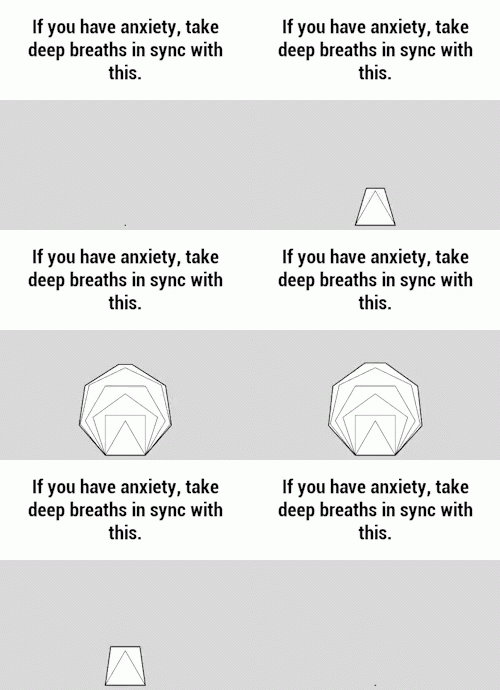
Once you master breathing techniques, you’ll find it’s much easier toovercome stress and anxiety. All you need to do is get some practice andyou’ll be on your way in no time.
Have you ever noticed that when you feel stressed or overwhelmed, you tend to take deep breaths? When you’re calm and relaxed, have you noticed how your breathing is often calmer and deeper?
Breath has a huge impact on how we feel, and it can make a big difference when we’re feeling overwhelmed or anxious. Unfortunately, a lot of us don’t know how to use our breathing patterns correctly to improve relaxation**.**
If you’re looking to minimize stress with breathing, you’re in the right place. Let’s get started.
Deep Breathing for Stress
Deep breathing is one of the best ways to reduce stress in the body. When you take a deep breath and exhale it slowly, you send a message to your brain that it’s time to calm down.
Your brain then sends this message to your body, reducing the feelings of anxiety and panic that may show in the form of sweating, heart palpitations, and shaking.
Breathing deeply helps to reduce your blood pressure and minimize tension. It’s also a good way to remove your focus from what’s bothering you. The key is figuring out how to manage your breathing correctly.
How To Do Breathing Exercises
There are various breathing exercises you can do to relax. One of the most common is slow belly breathing. If you’ve never practiced breathing exercises for stress before, start with this simple activity.
Start by sitting in a relaxing and comfortable place. You can also lay down if this makes you more relaxed. Put one hand under your ribs on your stomach and the other somewhere on your chest. Take a deep breath and feel your belly pushing outwards. Your chest should stay still.
Pursing your lips, breathe out slowly, as though you were trying to whistle. Feel the hand on your belly going in as you breathe out, and use that pressure to help push all the air out. Do this between 3-10 times. Take your time with each breath.
While you’re doing breathing exercises, pay attention to how you feel, both on a physical and emotional level. This will help you to become more mindful, which is a valuable tool when you’re working on stress reduction.
You can also add visualization to your breathing exercises. For instance, you can imagine you’re exhaling a red cloud of all the negative feelings and thoughts in your body, and imagine you’re breathing in positive things in a golden, glistening cloud.
How to Improve Your Breathing
After you’ve mastered belly breathing, you might try some more advanced breathing exercises. Alternatively, you may want to stick with the strategy you feel works best for you.
There’s no right way to go about things. Try to dedicate a little time to your breathing exercises every day, as this should help you to improve your breathing.
If you’re struggling with your breathing exercises, or not seeing the results you’d like straight away, consider some of the following tips:
- Use meditation guides: There are smartphone apps which can guide you through a deep breathing session, step by step. Sometimes, having someone talk you through the process is easier than doing it yourself.
- Add music: Relaxing music can help give you the meditative experience you’re looking for. Try to avoid anything with lyrics, as they might cause you to focus on the words rather than the flow of the music itself.
- Try aromatherapy: The right scents can make a huge difference in how you relax. Use lavender or valerian oils in a diffuser in your home. This is a great way to relax your mind and body when you need to calm down and work on your breathing.
Make sure you’re in a place where you’re not going to be exposed to any disruptions. You don’t want to be distracted from your focused state when you’re trying to master your breathing.
Use Your Breathing Techniques
Once you master breathing techniques, you’ll find it’s much easier to overcome stress and anxiety. All you need to do is get some practice and you’ll be on your way in no time.